
Headstand Exhibition Stand Design – Engaging visitors from three sides in the best possible way
What is a headstand?
In exhibition stand construction, the term Headstand a stand that is open on three sides towards the visitor aisle and has only a rear wall. Because of this design, the stand is often referred to in Germany as “Exhibition stand open on three sides” or “Peninsula Stand” . The open design creates a welcoming atmosphere and allows the stand to attract visitors from several directions. Typically, a head stand is situated at the head end of a row of stands, so that it borders on three walkways and thus achieves a very high level of visibility. Headstand exhibition stand design differs significantly from row and corner stands, which have only one or two open sides respectively, as well as from island stands, which are accessible from all four sides.
A comparison of exhibition stand types
| Stand type | Open pages (definition) | Characteristics |
|---|---|---|
| Row stand | 1 open page | The most economical option; three sides are adjacent to neighbouring stands. Offers plenty of wall space for graphic design, is suitable for smaller budgets and linear product displays. |
| Corner stall | 2 open pages | It is situated at a corner of the exhibition hall and opens onto two walkways. It offers greater visibility and allows the space to be divided into several functional areas. |
| Headstand | 3 open pages | Located at the end of a row of stands. A back wall and three open access points create a great sense of freedom and a strong visual impact from a distance. Ideal for large exhibits and interactive presentations. |
| Island status | 4 open pages | Complete visibility; there are no obstructions from neighbouring stands. Very expensive, but guaranteed to catch the eye. |
The choice of the right type of stand depends on your budget, location and trade fair objectives. Stand hire costs increase with the number of open sides; consequently, end and island stands are more expensive than row or corner stands. At German trade fairs, prices per square metre usually range between 220 and 300 euros, with end stands falling within the mid- to upper-range of pricing. End stands are also rare and often book up quickly, which is why early planning is essential.
Advantages of the 'Headstand' exhibition stand design
Excellent visibility and brand presence
The three open sides of a headstand create a Openness and long-range effects. Exhibitors can showcase their products from three sides, thereby attracting visitors from multiple directions. The stand catches the eye early on, sparking curiosity even from a distance. Its open design is particularly well-suited to companies that place great importance on brand presence: The generous space allows for eye-catching lighting, imagery and LED elements. The back wall, in particular, can be used as a major focal point – it offers space for logos, slogans or multimedia presentations. This creates high brand recognition and a strong brand presence.
Welcoming communication and visitor guidance
Kopfstand’s exhibition stand design encourages interaction: visitors can move freely around the stand and engage with staff on either side. The open layout facilitates dialogue between stand staff and prospective customers, thereby strengthening relationships and fostering potential business deals. Positioned along three walkways, the stand becomes a natural meeting point where visitors gather. This design is ideal for product presentations, live demonstrations or discussion areas, as the audience can view the action from various angles.
Nevertheless, a well-thought-out visitor flow is important. Due to the open layout, distractions such as noise and visual stimuli can have a greater impact on the stand. Well-thought-out zoning – for example, with semi-open meeting rooms, raised presentation islands or acoustic panels – can create a sense of calm whilst maintaining the open feel. Visitors should be able to intuitively recognise where they can get advice, where they can try out exhibits and where confidential discussions take place.
Flexibility for creative ideas
Headstands offer a a high degree of creative freedom. The open space can be utilised in a variety of ways: whether as a spacious lounge, a presentation stage, a 360° product display or an interactive experience zone – Kopfstand exhibition stand design allows for flexible layouts. This makes this type of stand ideal for complex products, machinery or large exhibits that need to be viewed from different angles. Designers can use the back wall as an architectural element to create height or to integrate multimedia installations. At the same time, the open access ensures that freedom of movement is maintained
With modular exhibition stands, components can be swapped out and adapted to different floor areas. This means that an end stand can later be converted into a corner stand or an island stand – a benefit for companies that wish to remain flexible. The modular design saves resources, reduces set-up and dismantling times, and allows for multiple uses with different layouts.
Ideal for digital and media technology
The use of multimedia technology adds an extra touch of glamour to headstands. LED video walls create impressive visual backdrops that display content in crystal-clear images and vibrant colours. Modern LED walls offer interactive features; visitors can access information or play videos via a touchscreen. A large video wall attracts attention and creates an immersive brand experience. Flexible software allows content to be updated in real time, meaning new product launches or live demonstrations can be adapted during the trade fair.
sectorplan’s Aluvision system features specially developed LED tiles that can be seamlessly integrated into modular exhibition stands. These modules are designed with sustainability in mind: they can be hired or reused multiple times, enabling a resource-efficient presentation. The modular approach means that exhibitors can scale video walls as required or combine them with event containers.
Successful customer projects


Challenges and proposed solutions
Limited confidentiality and acoustic influences
The openness of a headstand also presents its own challenges. With three open sides, it can Noise from the exhibition hall can be heard clearly, which makes it difficult to hold focused conversations. At the same time, there is limited privacy for confidential negotiations. Suitable solutions include acoustically effective ceiling and wall cladding, living walls and strategically placed soundproof booths. Half-height partitions or enclosed private rooms allow sensitive discussions to take place in an undisturbed environment without sacrificing the open-plan layout.
Higher stand hire charges and elaborate design
End stands generally require a larger budget. The more sides that are open, the higher the stand hire fee. Furthermore, end stands are scarce at many trade fairs and must be booked well in advance. The design must be visually appealing from all angles; this increases the creative effort and costs, particularly when integrating LED technology or bespoke construction. However, a modular design allows investment costs to be spread across several trade fair appearances. Those who opt for rental solutions can gain financial flexibility whilst benefiting from a professional service.
Logistics and visitor management
The increased flow of visitors presents logistical challenges. Staff must be available to assist visitors from several directions whilst keeping an eye on what is happening. Clear visitor guidance, with marked routes, colour-coded flooring and information points, helps to direct the flow of visitors. In addition, ample storage and changing areas should be provided so that documents and promotional material are kept out of sight.
Planning and Design at Kopfstand Exhibition Stand Construction
Analysis of objectives and target audience
Planning begins with a clear definition of the Trade fair objectives. Is it about launching a new product, generating leads or enhancing your brand image? It is just as important to analyse the Target audience. For tech-savvy decision-makers aged between 35 and 55, innovation, quality and sustainability play a key role. The stand design should reflect these values: modern materials, clean lines, digital elements and messages promoting sustainability.
Floor plan and visitor route
Position the headstand so that the usefully complement the three open sides. The main attraction should be positioned directly opposite the main entrance. Side entrances can be used for product zones, information counters or promotional areas. Floor coverings, lighting and ceiling banners can be used to guide foot traffic and create lines of sight. The back wall can serve as a display area or a closed-off storage space. If confidential discussions are planned, incorporate a meeting room with glass walls or sliding panels to ensure privacy.
Design, Technology and Interaction
- A three-dimensional brand world: Make the most of the height of the headstand to incorporate LED arches, banners or holographic projections. Large exhibits should be placed in the centre so that they can be viewed from all sides.
- LED video walls and interactive displays: Use LED walls as eye-catchers and offer interactive content that actively engages visitors. Touch functions allow visitors to explore your portfolio at their own pace and create a Personal connection to the brand.
- Lighting and colours: Bright, natural colours and energy-efficient LED lighting enhance the appeal of the space and draw attention to products. Accent lighting on the back wall or on graphic elements emphasises brand messages.
- Choice of materials and sustainability: Choose recyclable materials such as aluminium, wood from sustainably managed forests and printed textiles. Use modular floor and wall units to ensure the stand can be reused on multiple occasions.
- Lounge and hospitality areas: Provide comfortable seating areas and a welcoming atmosphere. This will encourage visitors to linger and engage in more in-depth conversations. Make sure these areas are arranged in such a way that they do not obstruct the flow of visitors.
Budget and Timetable
Planning for a stand should begin at least 6–12 months before the trade fair. Set your budget well in advance and take into account the higher costs for stand hire and design. By opting for modular systems, you can make efficient use of your budget; the one-off purchase or hire will pay for itself over several events. Obtain quotes from various service providers and check their references.
Sectorplan: your partner for your headstand
Industry knowledge and experience
sectorplan GmbH has over five decades of experience in trade fair stand construction and has established itself as a pioneer in sustainable trade fair stand construction. As early as the 1980s, the company was already constructing exhibition stands for renowned brands such as Siemens and Audi, and it has workshops specialising in woodwork, lighting and advertising technology, enabling the creation of bespoke structures. Since its partnership with Aluvision, modular exhibition stands which can be flexibly adapted to different areas. For customers, this means creative freedom within the system, shorter installation times and investment security.
Sustainability and Innovation
Sectorplan combines design excellence with environmental responsibility. The modular exhibition stands are based on the Aluvision system, which is made from recyclable aluminium and can be reused indefinitely. This reduces the carbon footprint and minimises material waste. At the same time, LED video walls and modern media technology attract attention. Customers have the choice of renting or buying the systems; the Flexbox event container can be integrated to enhance mobility and versatility.
Full-service approach
Sectorplan offers a Comprehensive service: From the initial consultation through to the Concept, from 3D design and production right through to logistics and hospitality, customers receive everything from a single source. In-house teams take care of the set-up, audiovisual technology, decoration and dismantling. Thanks to our in-house woodworking and metalworking workshops, bespoke solutions such as meeting rooms or special structures can be integrated. Collaboration with experienced partners ensures on-time delivery and reliable quality. Thanks to modular hire models, even companies with smaller budgets can create impressive exhibition stands.
Successful case studies
To illustrate the flexibility of a headstand, it is worth taking a look at some of sectorplan’s projects. At EXPO REAL 2024 in Munich, the Dirk Rossmann Immobilien GmbH covering an area of 180 m², with a stand that combined modern design with functional architecture. Clean lines, open spaces and high-quality materials created an inspiring environment for discussions and presentations.
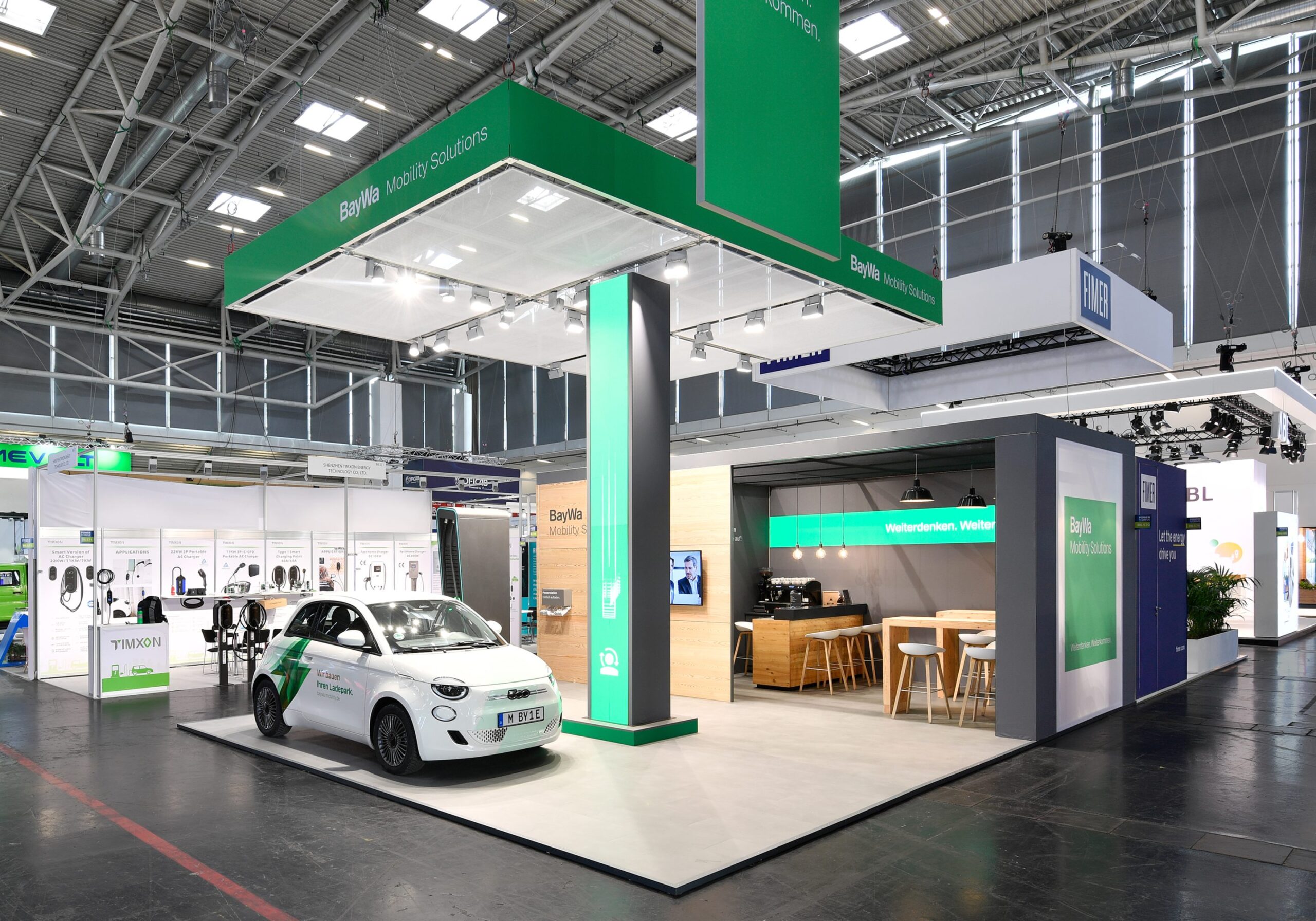
On the Power2Drive Europe showed the BayWa Mobility Solutions GmbH a 63-m² stand, which utilised the flexible Aluvision system and was constructed using a modular design. This compact space proves that even smaller stand designs can make a strong impression.
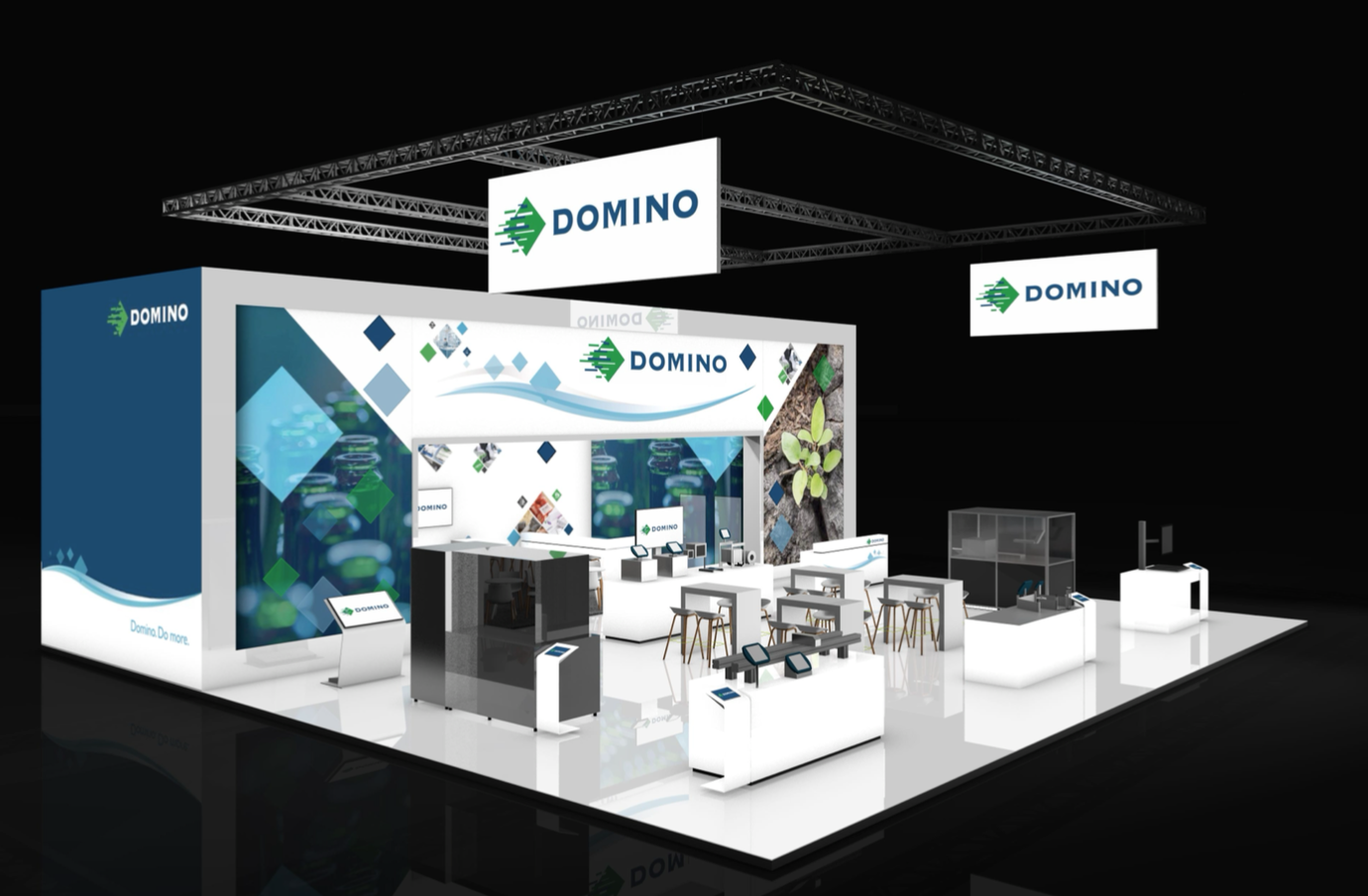
For Domino on the Interpack 2023 A large stand covering 350 m² was created. Despite its enormous size, the modular Aluvision system ensured efficient implementation; the open-plan layout created space for product displays, whilst separate meeting areas provided a quiet and private setting.
These examples show that headstands can vary greatly in scale – from medium-sized spaces to large-scale installations. By combining modular design, media technology and clever visitor guidance, it is possible both to captivate the audience and to achieve business objectives.
Conclusion: Kopfstand exhibition stand design as a key to success
A headstand is not just an architectural statement, but a strategic tool in trade fair marketing. Open on three sides, with a large rear wall for branding and media technology, it attracts visitors from several walkways and creates a welcoming atmosphere. Its high visibility, flexible design and the ability to showcase large exhibits make this stand type an ideal choice for companies wishing to present their brand world in an immersive way.
For the ‘headstand’ to be effective, careful planning is essential: clear objectives, design tailored to the target audience, a well-thought-out visitor flow and the integration of digital elements. Sustainability is playing an increasingly important role; modular systems such as Aluvision enable resource-efficient ‘Kopfstand’ stand construction and the reuse of components. As an experienced partner, Sectorplan successfully implements these principles and offers clients a full-service solution from concept to implementation.
With a headstand, you can create tangible added value: you’ll increase visitor numbers, strengthen your brand identity and convey a spirit of innovation and sustainability. If you’d like to take the next step, Please contact Sectorplan and let us advise you. Together, we’ll create a headstand display that puts your message centre stage and captivates visitors.

Frequently asked questions about the headstand
There are four basic measurement standards: the Row stand with one side open, the Corner stall with two open sides, the Headstand with three open sides and the Island status with four open sides. Each layout offers different possibilities in terms of visibility, visitor flow and budget; end and island stands are considered to attract the most attention, whilst row stands are the most cost-effective options
A Headstand – also known as a ‘peninsula stand’ or ‘three-sided open exhibition stand’ – is open on three sides to the visitor aisle and has only a rear wall. It is situated at the end of a row of stands, allowing visitors to approach the stand from three directions. An end-of-row stand design ensures excellent visibility and offers plenty of space for exhibits and branding.
The Island status (also known as a block stand) is the most expensive type of stand, as it is accessible from all four sides, offers plenty of space and creates an impressive presence. The more sides that are open, the higher the price per square metre for stand hire tends to be. Island stands also require a significant amount of planning and design work, but are suitable for companies with a large budget that aim to attract maximum attention.
The choice of stand type depends on your objectives, budget and target audience. Aisle stands are suitable for smaller budgets and linear product displays, whilst corner stands offer greater visibility and are ideal for larger exhibits. End stands are ideal for companies wishing to create a strong brand presence and interactive experiences, as they are accessible from three sides and offer plenty of scope for design. Island stands are suitable for large companies seeking maximum impact from a distance and a 360-degree presentation.
With the headstand, it is important to book a suitable stand space well in advance, as availability for this type of stand is often limited. The open layout requires a well-thought-out design that makes an impact from three sides and guides the flow of visitors. Ensure there is sufficient storage and rear space to create a pleasant atmosphere despite the open layout. Use modular systems such as Aluvision to build sustainably and flexibly, and integrate digital elements to capture visitors’ attention.
